
How AI Helps Small Game Studios Build and Ship Faster

At Team Tiger Games, co-founder Jason Nowak and his team of four used AI to create, localize, and globally soft launch their mobile game Match and Seek in record time. Their approach was not about replacing artists or developers with automation, but about using AI as a creative accelerator for design, asset creation, and marketing.
Key takeaway
AI can multiply what small, talented teams can achieve when guided by clear design vision, strong art direction, and human craftsmanship.
Who This Helps
- Indie and mobile game studios exploring AI workflows
- Art Directors and UI/UX designers leading small creative teams
- Technical Directors and producers looking to streamline production pipelines
- Startups experimenting with cost-effective game production
- Anyone studying practical applications of AI in real-world game development
Why AI in Game Development Is About Speed and Craft, Not Shortcuts
Like many indie studios, the core challenge was scale. With only four people, every team member had to handle multiple responsibilities across art, engineering, and production. AI entered the workflow as a supporting tool that accelerated execution while still depending on artistic judgment, taste, and game design principles.
Instead of viewing AI as a replacement for professional capabilities, the team treated it as a force multiplier. It helped them move from concept to polished visuals faster, while art direction and human review ensured that style and cohesion remained intact.
How Team Tiger Built a Game Using AI-Assisted Art
Match and Seek is a casual puzzle game where players discover and match playful 3D objects, gradually revealing vibrant scenes. The appeal comes from clarity, warmth and personality in the presentation. These qualities typically require significant time investment.
Working with a small team meant that the usual asset production workflow would have slowed development. The solution was to redesign how assets were created and reused.
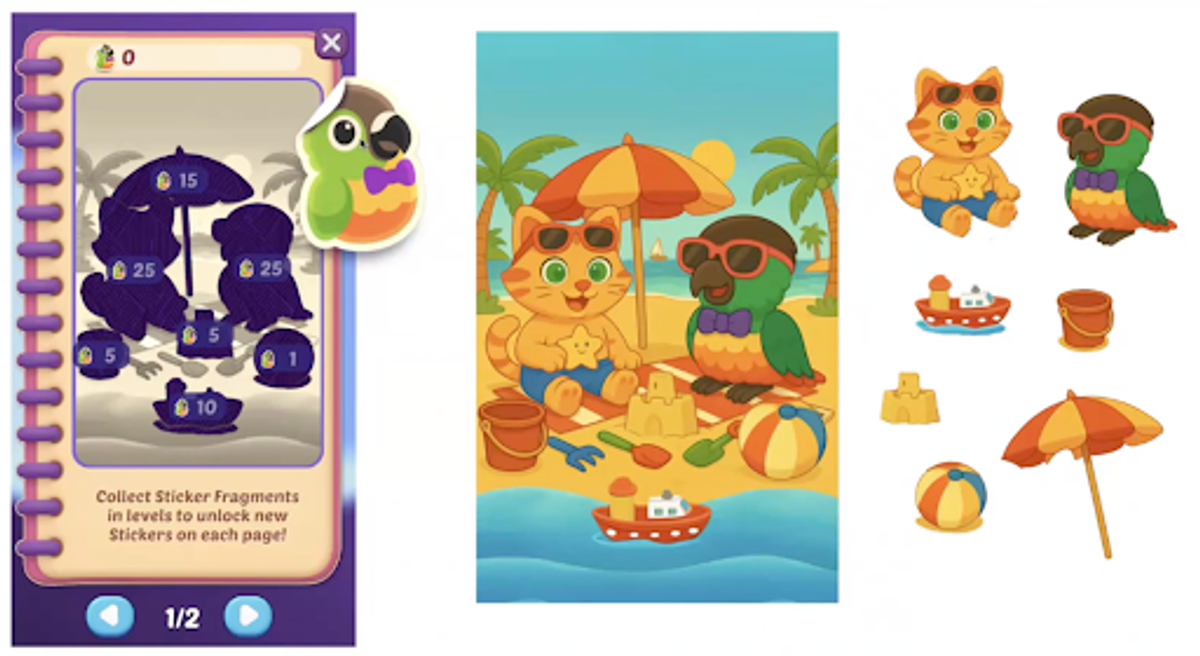
Operational Leverage: The AI-Assisted Art Pipeline
Traditional pipelines often require separate asset paths for in-game objects and marketing visuals. Team Tiger built a workflow that allows both to come from the same source.
The workflow:
- Begin with the 3D assets already used in-game
- Use AI image generation tools to create polished 2D illustrations
- Refine and correct each piece manually to match the chosen style
This workflow did not eliminate the role of art direction. Instead, it made the art director’s judgment even more central in guiding the final look.
Outcome: A single creative decision scales across multiple surfaces of the game experience.
This is process leverage, not headcount leverage.
Turning Pets Into Playable Characters
The team also developed characters inspired by their own pets. By training the model on original reference images and refining the outputs, they arrived at a playful, repeatable character style.
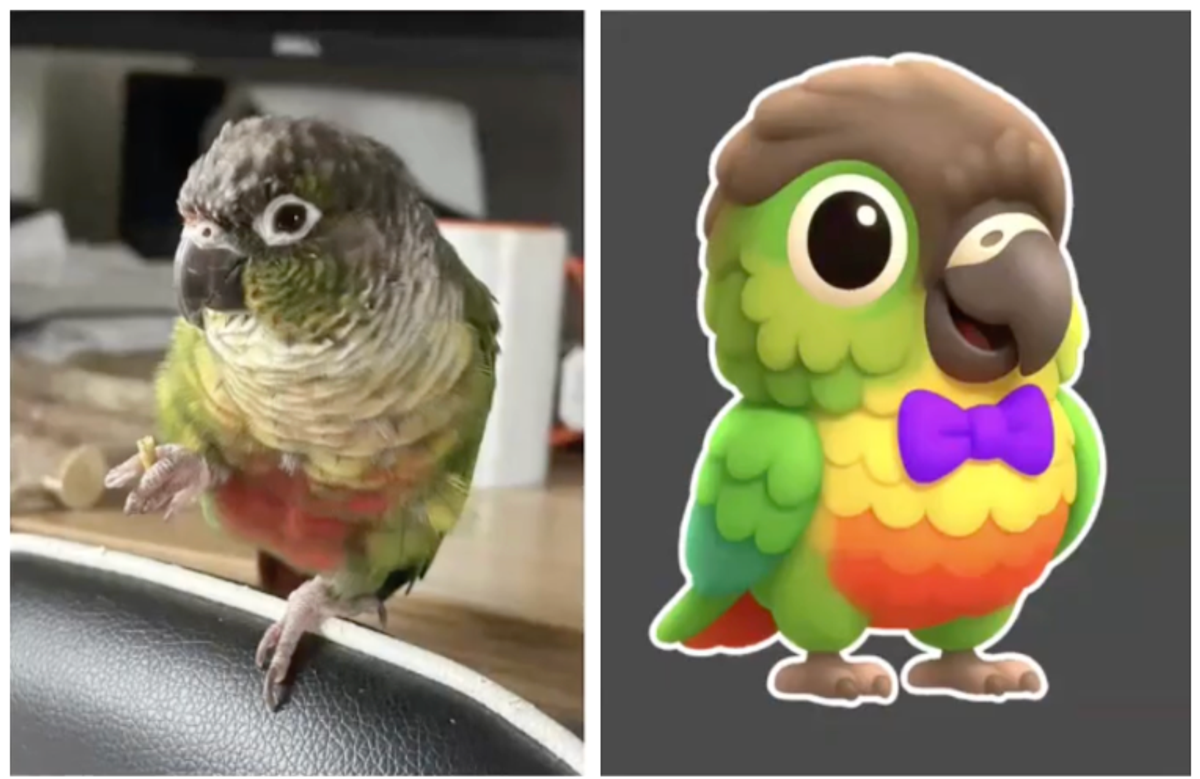
Once the visual anchor was established, the team could:
- Generate new poses quickly
- Add accessories without breaking continuity
- Create expressions and emotional states
- Adapt characters into new features, such as a sticker book collection system
The result is cohesive character identity, developed efficiently and owned fully by the studio.
The Impact: Months of Work Reduced to Weeks
Match and Seek was built and globally soft-launched in a fraction of a typical development timeline. The greatest efficiency gains came not from cost savings, but from accelerated iteration cycles.
Concepting, asset direction, and style exploration moved significantly faster, freeing the team to spend more time refining gameplay, visual cohesion, and user experience. This pace allowed a four-person studio to operate with the output velocity of a much larger team.
Why Expertise Still Matters More Than Ever
The success of Team Tiger’s approach relies on strong creative intent. AI is most effective when it supports a well-formed vision, not when it is asked to provide one. The team’s process always begins with clarity around art direction, narrative tone, and gameplay goals. AI simply shortens the path from idea to execution.
In other words, the effectiveness of these tools depends entirely on the judgment and experience of the people using them.
About the Speaker
Jason Nowak is the Co-founder and Chief Creative and Technical Officer at Team Tiger Games. He has more than 15 years of experience in mobile game development, working on major titles and leading small creative teams focused on designing polished and engaging player experiences.