
Why AI Should Be Your First Hire: How Game Studios Reduce Risk, Cut Costs, and Accelerate Production

Small teams are building big games again, and AI is their secret weapon. Matthew Wylds, Co-Founder and CEO of Team Tiger Games, shares how treating AI as your “first hire” can help studios prototype faster, learn faster, and scale smarter, without sacrificing creativity.
Key takeaway:
AI doesn’t replace people. It helps build lean, creative teams that learn and adapt before they grow.
Who This Helps
- Studio founders and producers planning early-stage hiring
- Creative directors balancing team size and AI integration
- Technical leads exploring generative tools for production
- Indie teams looking to ship faster with limited resources
- Executives designing hybrid workflows between humans and AI
Why Early AI Integration Matters for Game Studios
Before Team Tiger became a four-person powerhouse, it was a 40-person studio. Their first game, Secret Puzzle Society, took two years to build. It was ambitious, beautiful, and successful, but slow.
After launching that project, Wylds recognized the opportunity to move faster. He restructured Team Tiger around a new challenge: how much could a small team accomplish if AI became part of the core team?
"We built a great game, but I knew we could move faster. I wanted to see what a small team could do if we really leaned into AI."
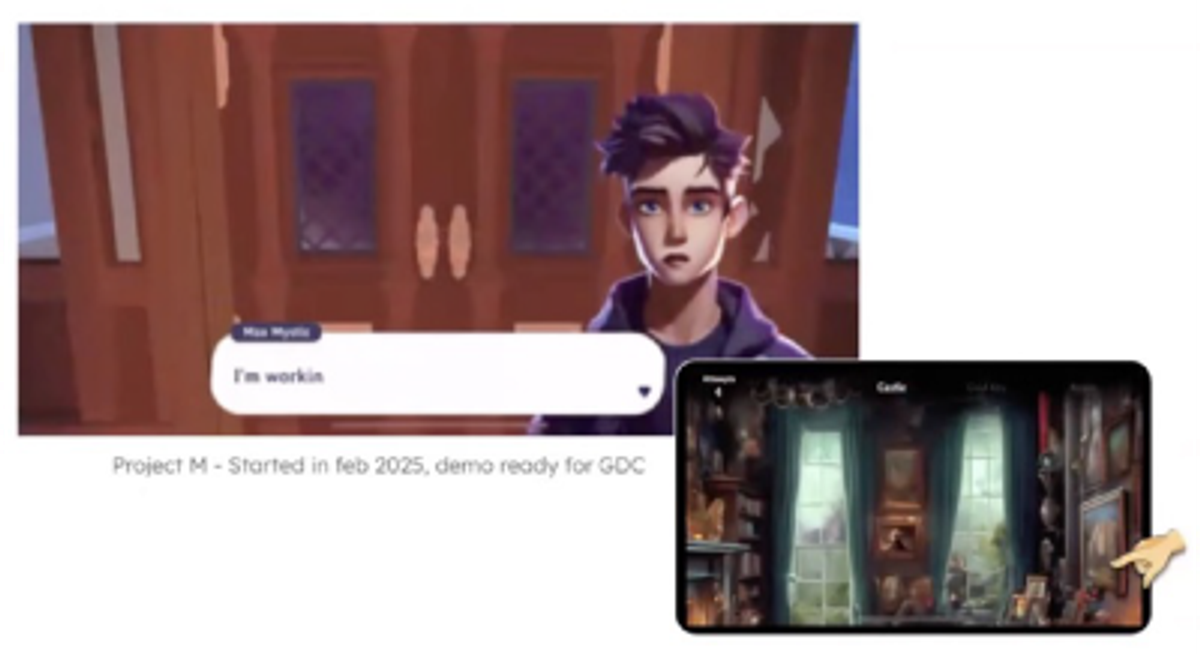
Within months, the studio developed and launched two polished mobile titles, Project M and Color Quest, proving that AI-assisted production can deliver AAA-quality results on an indie schedule.
The strategic implication for executives:
Studio size is no longer the primary determinant of production output. The operating model is.

How AI Functions as a First Hire for Modern Studios
Wylds treats AI not as a toolset but as a collaborator with defined responsibilities. In Team Tiger’s workflow, AI explores creative directions, generates code scaffolds, and streamlines repetitive work so developers can focus on creative problem-solving.
The approach ensures human control over quality and taste while letting AI handle scale and iteration speed.
Why Smaller Teams Become Stronger with AI
A smaller AI-enabled team has operational advantages:
Faster decisions
No large meetings. No long approval chains. Two people can test, adjust, and ship updates in a single day.
Lower overhead
A lean structure reduces management complexity and budget pressure. This strengthens the runway and supports more experimentation.
More curiosity and experimentation
Ideas move from concept to playable builds in days instead of months. This supports more live tests, more learning cycles, and more confident feature decisions.
The Studio of the Future Is Agile, Not Automated
Wylds emphasizes that automation is not the goal. True creativity comes from people who understand when and how to use AI effectively.
By focusing on process, culture, and curiosity, Team Tiger has built a model for modern game studios that is small, nimble, AI-empowered, and distinctly human.
A Simple Framework for Starting AI-Enabled Production
- Pick one workflow to improve.Start with AI for research, art exploration, or code scaffolding — not everything at once.
- Build around curiosity.Encourage experimentation and daily iteration.
- Always refine.Treat AI output as a draft to be improved, not a finished product.
- Measure by learning speed.Success comes from faster discovery, not just faster delivery.
AI allows teams to experiment, fail, and learn quickly, which leads to better creative outcomes over time.
Final Takeaway
The experience of Team Tiger shows that innovation is not defined by team size. It is defined by learning speed, creative focus, and the ability to rethink production models. With AI acting as an early teammate, studios can reduce risk, accelerate iteration, and produce higher quality work before expanding teams.
About the Speaker
Matthew Wylds is the Co-Founder and CEO of Team Tiger Games, a studio reimagining how small teams create big experiences with AI. With over twenty years in game development, including leadership roles at EA Mobile, Digital Chocolate, and Jam City, Wylds combines deep production experience with a forward-looking approach to AI-assisted workflows. His studio’s recent titles, Project M and Color Quest, showcase how lean teams can achieve AAA-level polish through intelligent use of generative tools.
Watch Full Talk
AI as Your First Hires: Empowering Game Studios Before Scaling Up Teams